 English
Views: 26 Author: Site Editor Publish Time: 2025-11-20 Origin: Site


The portable pocket spray bottle we rely on today—whether for skincare, cleaning, or travel—didn’t appear overnight. It evolved through decades of technological tweaks, driven by the need for easier use, portability, and versatility. From clunky early sprayers to sleek portable sprayer models that fit in purses, the journey of the spray bottle is a story of turning “functional” into “essential.” Let’s trace its key evolutionary stages, highlighting how each innovation shaped the modern multi-functional spray bottle.
The first spray - like devices were far from “convenient”—they were bulky, manual tools designed for specific industrial or agricultural uses:
Syringe - Style Sprayers: In the 1800s, the earliest sprayers resembled large syringes. Made of metal (like brass or tin), they had a long tube attached to a piston. Users would fill the tube with liquid (e.g., pesticides for farms or disinfectants for hospitals), then push the piston to force liquid out in a stream. These tools were heavy (often over 2 pounds) and could only dispense a coarse stream, not a mist. They were never meant for personal use—think farmworkers or medical staff, not everyday consumers.
Hand - Pump Agricultural Sprayers: By the early 1900s, sprayers got a slight upgrade: hand pumps attached to metal tanks. Farmers would pump the handle to build pressure inside the tank, then squeeze a trigger to spray pesticides. While more efficient than syringes, these were still large (holding 5–10 gallons) and immobile. The “spray” was still a thick stream, and there was no way to adjust the output—hardly the convenient spray bottle we know today.
The biggest shift in spray bottle evolution came with the invention of plastic and the focus on consumer needs. This era turned industrial tools into household items:
First Plastic Spray Bottles: In the 1930s, manufacturers started using early plastics (like Bakelite) to replace heavy metal. These plastic sprayers were smaller (holding 8–16 ounces) and lighter, making them suitable for home use—think cleaning sprays or plant mists. The nozzle design also improved: instead of a fixed stream, some models had a small adjustable valve that let users switch between “stream” and “mist.” However, the mist was still uneven, and the plastic was brittle (prone to cracking if dropped).
Aerosol Cans (and Their Limitations): In the 1940s, aerosol cans became popular for products like hairspray and insect repellent. They used compressed gas to spray a fine mist, which was a breakthrough for portability. But aerosols had big flaws: they relied on harmful propellants (like CFCs, which damaged the ozone layer), were single - use (not refillable), and couldn’t be customized for different liquids (e.g., thick hair gel vs. thin perfume). This gap left room for the portable sprayer to evolve further.
As environmental concerns grew and consumers wanted more control, spray bottles focused on two key features: refillability and compactness.
Refillable Plastic Spray Bottles: In the 1970s, after CFCs were banned, manufacturers returned to pump - style spray bottles—this time, with better plastic (like HDPE, which is durable and recyclable). These bottles were fully refillable: users could pour in homemade cleaning solutions, perfumes, or plant mists, instead of buying single - use aerosols. The nozzle also got a redesign: fine - mist nozzles with tiny openings (less than 1mm) created a smoother mist, thanks to improved manufacturing techniques that allowed precise hole drilling.
Mini Portable Sprayers for Travel: By the 1990s, travel became more common, and consumers needed small spray bottles that fit in carry - ons. The first portable sprayer models for travel were 30–50ml, made of lightweight plastic or glass. They had leak - proof caps (a new innovation: rubber gaskets inside the cap) and recessed nozzles to prevent accidental sprays. These were the first true “convenient spray bottles” for personal use—you could toss one in your purse for perfume touch - ups or in your luggage for skincare mists.
Today’s spray bottles are all about versatility, sustainability, and smart design. They’re no longer just “sprayers”—they’re multi-functional spray bottle tools that adapt to different needs:
Multi - Purpose Nozzles: Modern spray bottles have nozzles that adjust to 3–4 settings: fine mist (for skincare/perfume), medium spray (for cleaning/plant care), stream (for targeted application, like spot - cleaning stains), and even “off” (a locking feature to prevent leaks). For example, a single 50ml multi-functional spray bottle can be used for facial toner (mist setting), hand sanitizer (medium spray), and spot - cleaning (stream setting)—perfect for travel.
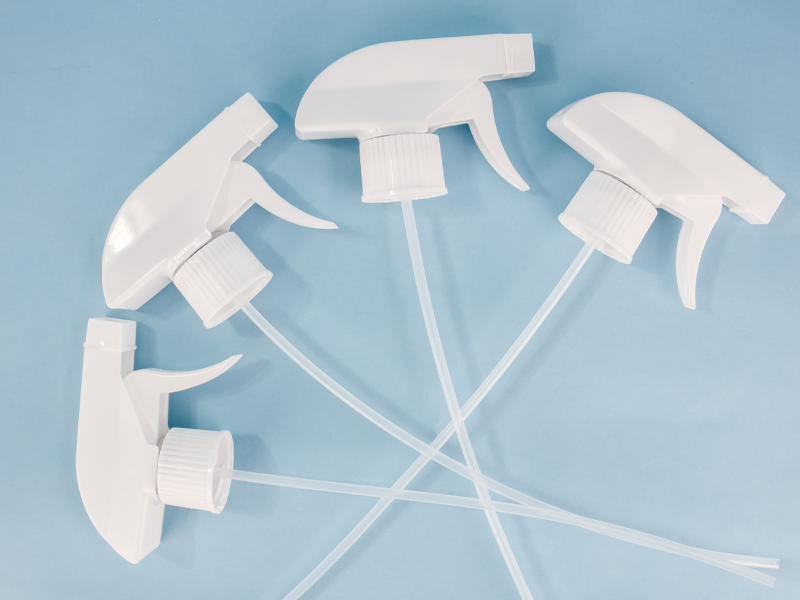
Eco - Friendly Materials: As sustainability becomes a priority, manufacturers use recycled plastic, biodegradable materials (like PLA), or glass for spray bottles. Many also have replaceable parts (e.g., nozzles or pumps) so users can fix a broken part instead of throwing away the whole bottle.
Smart Features (for Specialty Models): High - end spray bottles now include small innovations like clear measurement marks (to track how much liquid is left), anti - clog nozzles (coated with non - stick materials to prevent residue buildup), and even ergonomic pumps (designed to be easy to press for people with hand pain). These features turn basic spray bottles into user - friendly tools for every need.
From the heavy metal syringes of the 1800s to today’s sleek multi-functional spray bottle , the evolution of the portable spray bottle is a story of solving consumer problems: making tools lighter, more portable, more sustainable, and more versatile. Today, whether you’re using a portable sprayer for travel perfume, a refillable bottle for homemade cleaning solutions, or a multi - setting bottle for skincare, you’re benefiting from decades of technological tweaks. As we look to the future, we can expect even more innovations—like self - cleaning nozzles or biodegradable plastics—that will keep the convenient spray bottle relevant and essential for years to come.Our Subir company also keeps pace with the times and is committed to developing and producing cost-effective and portable spray bottles and other packaging materials. You can learn more about us by browsing our website:https://www.packsubir.com. If you have any questions, you can also contact us by 0086-574-88390029 or samuel@subircosmetics.com at any time.


