 English
Views: 26 Author: Site Editor Publish Time: 2025-12-10 Origin: Site


Turning a regular bottle into a homemade spray bottle is a budget-friendly, eco-conscious hack—you can repurpose empty containers (like old lotion bottles, sauce jars, or water bottles) instead of buying new ones. Whether you need a simple spray bottle for plant mist, homemade cleaner, or travel-sized skincare, this DIY project requires only basic tools and takes minutes to finish. Below are step-by-step tips to create a functional transformed spray bottle, plus tricks to ensure it works smoothly and lasts.
Not all regular bottles work for transforming —pick one that’s durable, compatible with your liquid, and fits a spray head. Here’s what to look for:
Material: Opt for plastic (PP, PET, or HDPE) or glass bottles. Plastic is lightweight and shatterproof (great for kids’ areas or travel), while glass is non-porous (ideal for skincare, essential oils, or harsh cleaners that might react with plastic). Avoid thin, flimsy plastic (like disposable water bottles)—they can crack when pressure is applied to the spray head.
Neck Size: Select a bottle with a standard screw-on neck (most lotion, shampoo, or condiment bottles have this). The neck diameter should match common spray heads (24–28mm is “universal” for most replacement spray heads). If the neck is too small (e.g., a small perfume sample bottle) or too large (e.g., a gallon jug), it will be hard to find a compatible spray head—stick to medium-sized necks for easiest matching.
Cleanliness: Thoroughly clean the bottle before transforming. For plastic bottles, wash with warm soapy water, rinse well, and air-dry for 24 hours. For glass bottles, use vinegar to remove stubborn residue (e.g., old sauce or oil), then rinse and dry. Any leftover residue can clog the spray head or contaminate your new liquid.
You don’t need special equipment—most supplies are in your kitchen or bathroom. Here’s what you’ll need:
Regular Bottle: The empty container you chose (clean and dry).
Replacement Spray Head: The most critical part—buy a “universal” spray head from a dollar store, hardware store, or online. Look for heads labeled “fits 24–28mm necks” (compatible with most medium-sized bottles) and choose the type based on your liquid:
Fine-mist head: For thin liquids (toner, plant mist, sanitizer).
Stream/multi-setting head: For thick liquids (cleaning gels, diluted hair oil).
Tools: A pair of scissors (to trim the spray head’s dip tube if needed), a small funnel (optional, for easy filling), and a clean cloth (to wipe spills).
Sealing Tape (Optional): If the spray head is slightly loose on the bottle neck, use a small piece of Teflon tape (or electrical tape) around the neck threads—this creates a tighter seal to prevent leaks.
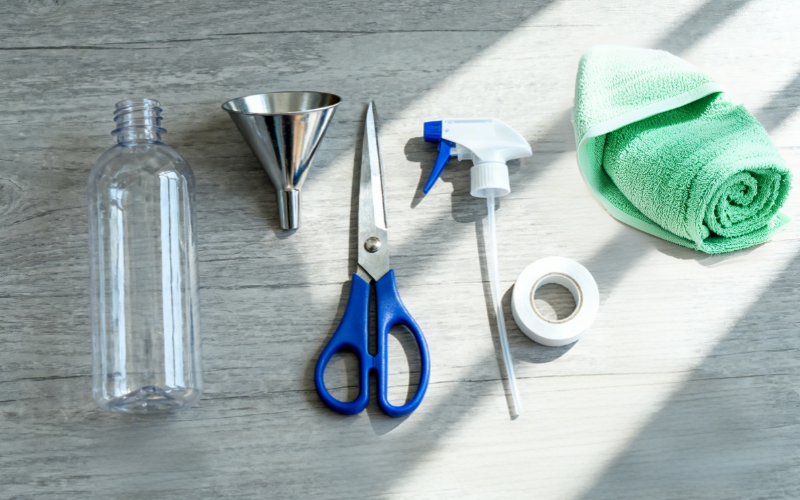
Follow these simple steps to assemble your DIY spray bottle—it takes less than 10 minutes:
Most replacement spray heads come with a long dip tube (the thin plastic tube that draws liquid from the bottle). Hold the spray head over your regular bottle and measure how long the tube needs to be— it should reach the bottom of the bottle but not be so long that it bends (bends block liquid flow). Use scissors to cut the tube to the right length, then attach it to the spray head (it usually snaps or twists into place).
Screw the spray head onto the regular bottle’s neck clockwise. Tighten it until it’s snug—don’t over-tighten (this can warp the bottle’s neck or break the spray head’s seal). If the head feels loose after tightening, wrap 1–2 layers of Teflon tape around the bottle’s neck threads (before attaching the head) to fill gaps.
Fill the bottle ¾ full with water (to avoid overfilling, which causes pressure buildup). Press the spray head a few times—if water sprays evenly and there are no leaks around the neck, your transformed spray bottle is ready. If it leaks, check if the dip tube is properly attached or if the spray head needs to be tightened more (or add more tape).
Empty the water, then fill the bottle with your liquid (e.g., homemade cleaner, plant mist, or diluted toner). Use a funnel to avoid spilling liquid onto the neck (spills can damage the seal over time). Screw the spray head back on and test again—you now have a functional sprayer!
To make your spray bottle last longer and work better, follow these tricks:
Match the Liquid to the Spray Head: Don’t use a fine-mist head for thick liquids (like hair serum or cleaning gel)—they’ll clog. Swap in a stream-setting head for thick formulas. For delicate liquids (like essential oil blends), use a glass bottle and a fine-mist head to prevent chemical reactions.
Clean the Spray Head Regularly: If the spray gets uneven or clogs, remove the spray head and soak it in warm soapy water for 10 minutes. Use a toothpick to clear the nozzle’s tiny opening, then rinse and reattach. This prevents buildup from ruining the spray.
Label the Bottle: Use a marker or sticker to label what’s inside (e.g., “Plant Mist” or “Glass Cleaner”). This avoids mix-ups (you don’t want to spray cleaner on your face!) and helps others in your home use it safely.
Don’t Overfill: Always fill the bottle to ¾ capacity, not full. Empty space at the top lets the spray head build pressure, ensuring a smooth spray. Overfilling causes leaks and makes the spray head work harder, shortening its life.
Creating a DIY spray bottle by transforming a regular bottle is a simple, sustainable way to save money and reduce plastic waste. With these tips, you can turn old, empty containers into useful tools that work just as well as store-bought spray bottles. Next time you’re about to throw away a regular bottle—stop! Grab a replacement spray head and turn it into something new.Try it now. If you are short of spray heads and other related materials, you can check out our website:https://www.packsubir.com. We provide cost-effective spray bottles and spray heads. If you have any questions, please contact us.Our phone is 0086-574-88390029,and email is samuel@subircosmetics.com.


